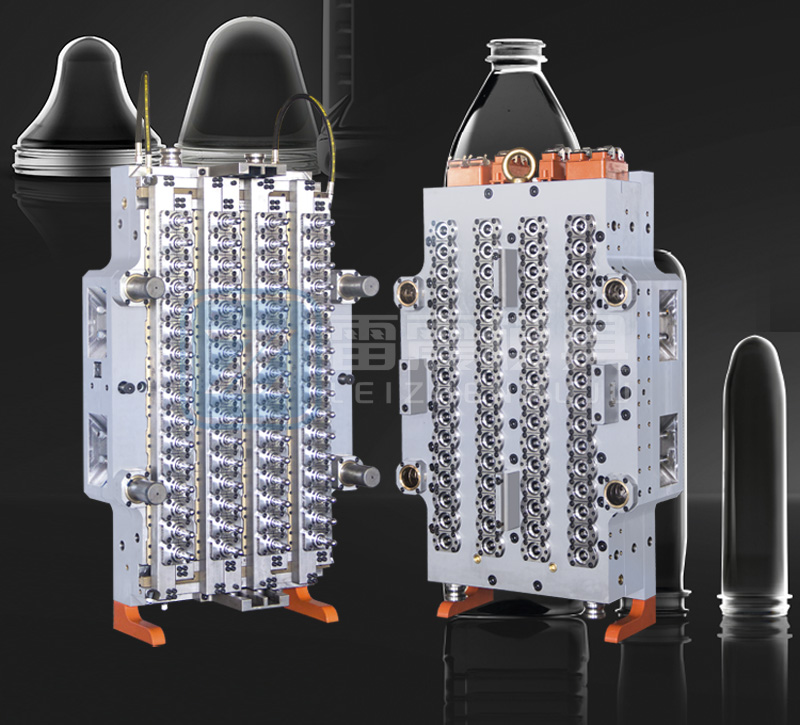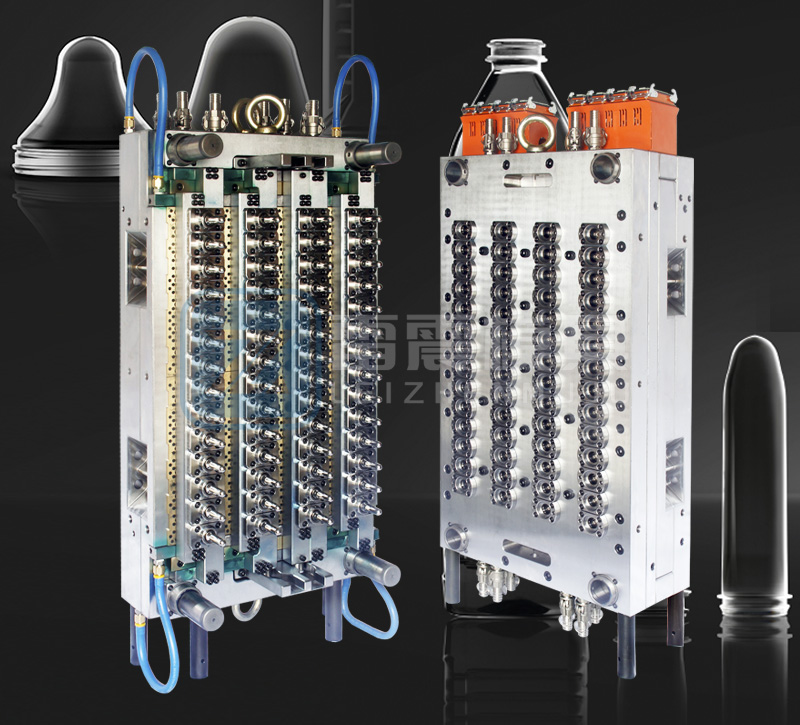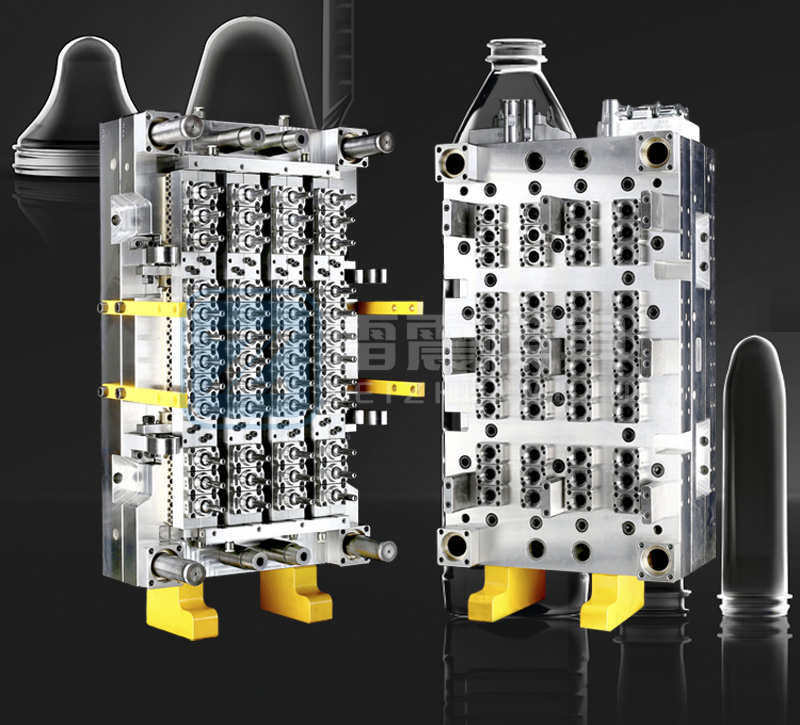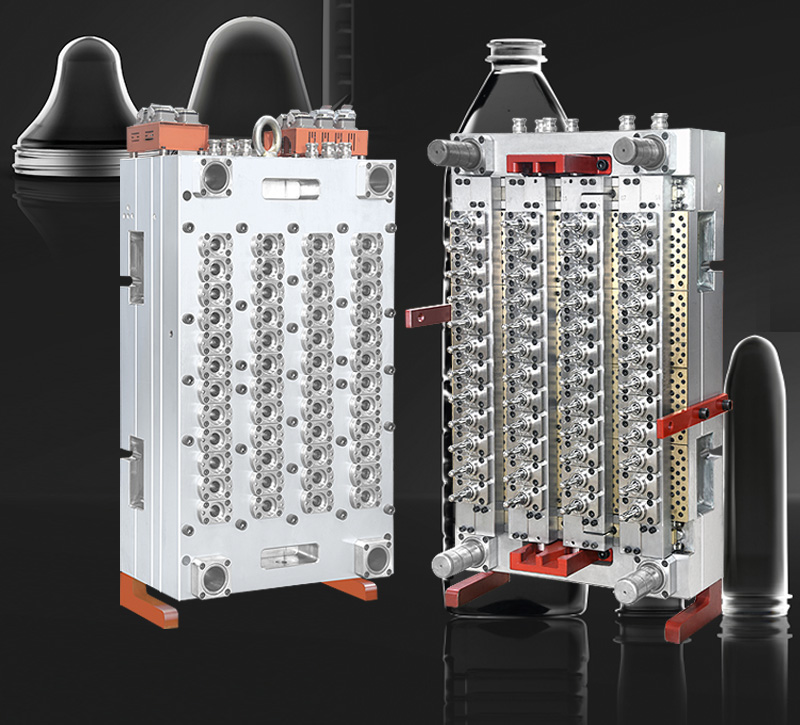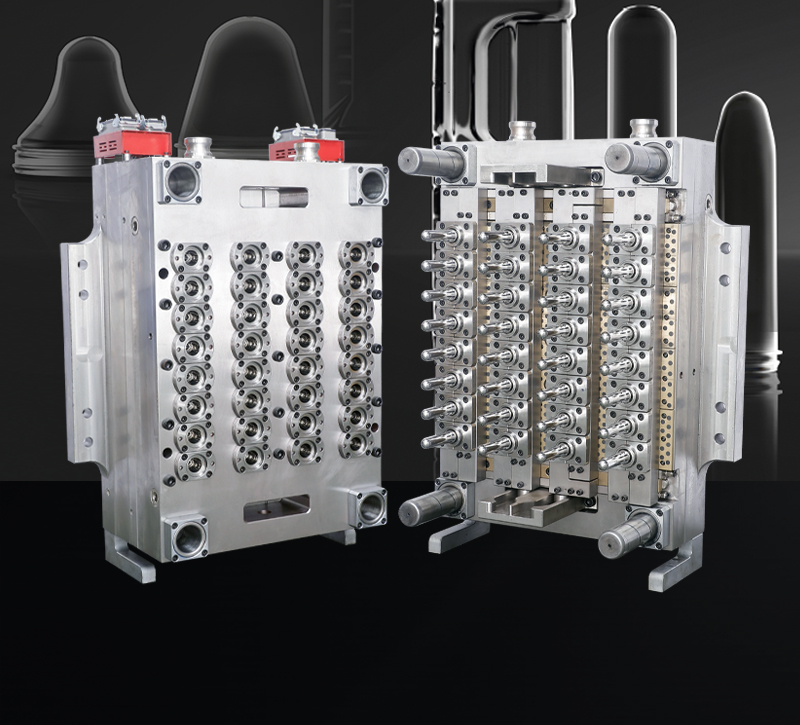
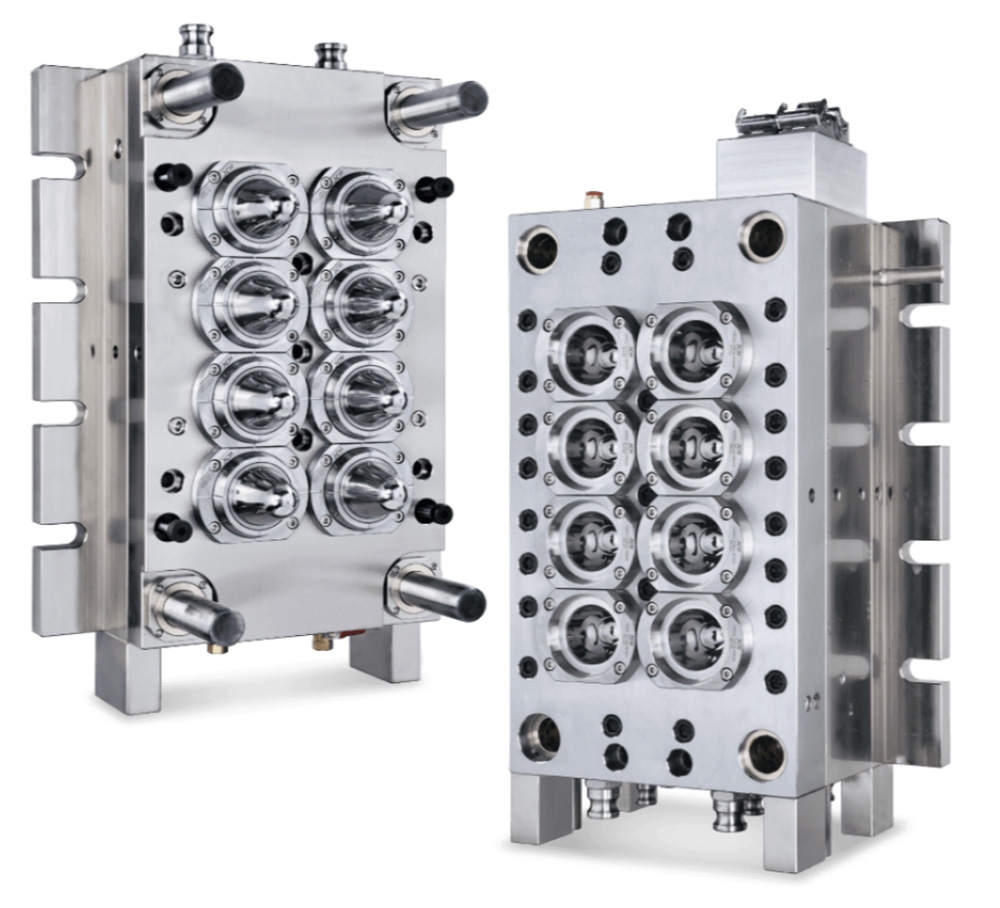
No Haze, No Crystallization: LEIZHEN's Precision Cooling Technology for Preform Molds
No Haze, No Crystallization: LEIZHEN's Precision Cooling Technology for Preform Molds
In PET preform manufacturing, clarity is everything. The preform—the starting point for every PET bottle—must be crystal clear to produce bottles that meet consumer expectations for purity and quality. Yet two of the most persistent and frustrating defects that plague preform production are gate haze (commonly called "white mist" or "blush") and crystallization (visible white areas indicating uncontrolled crystal growth).
These defects are not merely cosmetic. They indicate:
Improper thermal management during the injection molding process
Residual stress that can affect blow molding performance
Potential weak points in the final bottle
Inconsistent material properties across production runs
At LEIZHEN, we have made precision cooling a core engineering discipline. This article explores the science behind haze and crystallization defects—and how LEIZHEN's advanced cooling technology eliminates them, delivering crystal-clear preforms, cycle after cycle.
Understanding the Defects: Haze and Crystallization
Gate Haze (White Mist / Gate Blush)
What it looks like: A milky, white, or hazy area surrounding the gate—the injection point at the center of the preform base.
What causes it:
Excessive shear heating during injection
Insufficient cooling in the gate area
Premature solidification followed by reheating
Stress-induced crystallization from rapid temperature changes
Why it matters:
Weakens the bottle base during blow molding
Creates visible defects in the final bottle
Indicates process instability
Crystallization
What it looks like: White, opaque areas visible anywhere on the preform—most commonly in the gate region, but also in the body or neck.
What causes it:
PET crystallizes when held at temperatures between approximately 120°C and 200°C for too long
Slow cooling allows crystals to grow
Temperature fluctuations create zones of uncontrolled crystal formation
Why it matters:
Reduces clarity of the final bottle
Creates weak points that may fail during blow molding
Affects barrier properties of the bottle
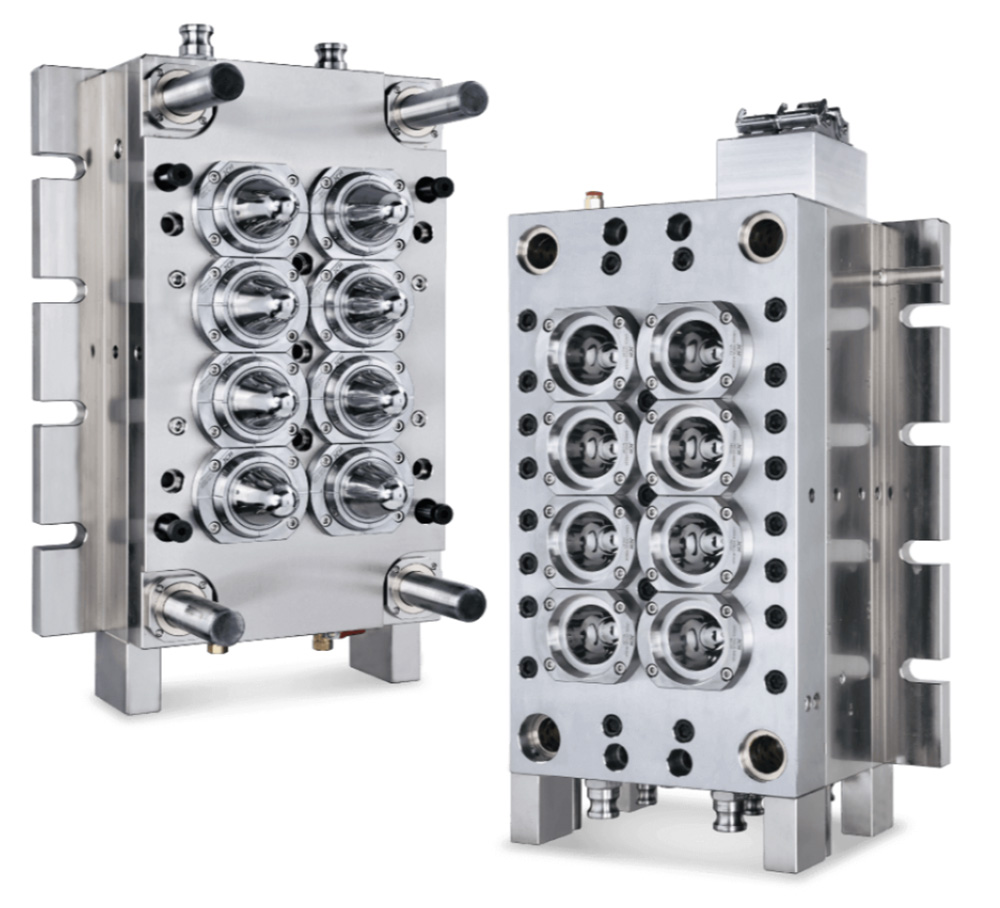
The Science of PET Cooling
To understand why precision cooling is critical, we must first understand how PET behaves during the injection molding process.
| Phase | Temperature | PET Behavior |
|---|---|---|
| Melting | 260–280°C | PET is molten, amorphous |
| Injection | 260–280°C | PET flows into cavity |
| Cooling begins | Below 120°C | PET "freezes" into amorphous state |
| Critical zone | 120–200°C | Crystallization occurs if cooling is too slow |
| Target | Below 60°C | Safe ejection, amorphous structure preserved |
The Goal: Cool the PET from 280°C to below 120°C as quickly as possible to prevent crystal formation—but do so uniformly to prevent stress and haze.
The Challenge: Cooling the Gate Area
The gate area presents the most difficult cooling challenge in preform molding:
| Factor | Challenge |
|---|---|
| Thickest section | The gate area has significantly more material than the rest of the preform |
| Last to fill | Material enters last, often hottest |
| High shear | Highest shear heating occurs at the gate |
| Limited cooling access | Gate area is surrounded by hot runner system |
| Critical for blow molding | The gate becomes the bottle base—must be strong and clear |
If the gate area is not cooled quickly and uniformly:
Haze appears from stress-induced crystallization
White rings form around the gate
Crystallization creates weak, brittle areas
LEIZHEN's Precision Cooling Technology
Technology 1: Conformal Cooling Channels
Traditional preform molds use straight-drilled cooling lines that run parallel to the preform axis. While effective for the body, these channels cannot follow the complex geometry of the gate area.
LEIZHEN's Solution: Conformal cooling channels that follow the exact contour of the preform cavity, including the gate region.
How it works:
Cooling channels are machined to follow the preform shape
Channels are placed closer to the cavity surface where cooling is needed most
3D cooling geometry allows uniform heat extraction from thick gate areas
Benefits:
15–25% faster cooling in gate area
Eliminates hotspots that cause haze
Uniform temperature distribution prevents stress
Technology 2: Zone-Specific Cooling Circuits
Different areas of the preform have different cooling requirements. LEIZHEN molds feature independent cooling circuits for each zone:
| Cooling Zone | Location | Cooling Strategy |
|---|---|---|
| Gate Zone | Base/preform center | Aggressive cooling to prevent crystallization; conformal channels around gate |
| Body Zone | Main preform wall | Uniform cooling for consistent wall thickness |
| Neck Zone | Thread finish | Controlled cooling to maintain crystallized neck finish |
Benefits:
Each zone optimized for its specific thermal requirements
Independent temperature control prevents interference
Can be fine-tuned for different PET resins and preform designs
Technology 3: CFD-Optimized Cooling Design
Before manufacturing, LEIZHEN engineers use computational fluid dynamics (CFD) to model and optimize cooling performance:
What we analyze:
Coolant flow rate through each circuit
Pressure drop and flow distribution
Heat transfer coefficient at cavity surfaces
Temperature distribution across the preform
Cooling time to reach safe ejection temperature
How it helps:
Identifies and eliminates hotspots before manufacturing
Optimizes channel placement for maximum efficiency
Predicts cooling time with high accuracy
Ensures cavity-to-cavity cooling consistency
Technology 4: Precision Cooling Channel Manufacturing
Even the best cooling design fails without precision manufacturing. LEIZHEN ensures:
High-Speed CNC Machining:
Cooling channels machined with ±0.05mm accuracy
Smooth channel surfaces for optimal flow
Complex 3D geometries achievable through advanced machining
Quality Verification:
Flow testing to verify channel integrity
Pressure testing to detect leaks
Thermal imaging to validate cooling uniformity
Technology 5: Enhanced Gate Cooling Systems
The gate area receives special attention in LEIZHEN molds:
Gate-Specific Cooling:
Dedicated cooling circuits for the gate region
Conformal channels that wrap around the gate insert
Beryllium copper gate inserts for superior thermal conductivity
Beryllium Copper Benefits:
Thermal conductivity 5–10 times higher than tool steel
Rapid heat extraction from the gate area
Prevents heat buildup that causes haze
Gate Insert Design:
Removable gate inserts for easy maintenance
Precision-ground surfaces for perfect sealing
Interchangeable designs for different gate diameters
Technology 6: Advanced Material Selection
Cooling efficiency depends on the materials used in the mold. LEIZHEN selects materials based on thermal performance:
| Component | Material | Thermal Conductivity |
|---|---|---|
| Gate insert | Beryllium copper | 100–200 W/m·K |
| Cavity body | High-grade tool steel | 25–35 W/m·K |
| Neck ring | Stainless steel | 15–25 W/m·K |
| Cooling plates | Aluminum bronze | 40–60 W/m·K |
The LEIZHEN Quality Assurance Process
Every LEIZHEN preform mold undergoes rigorous cooling validation:
Phase 1: Design Validation
CFD analysis of cooling performance
Thermal simulation to predict temperature distribution
Gate area cooling verification
Phase 2: Manufacturing Validation
Flow testing of all cooling circuits
Pressure testing to ensure leak-free operation
Dimensional verification of cooling channel positions
Phase 3: Trial and Testing
Preform clarity inspection under proper lighting
Gate haze evaluation using standardized methods
Crystallinity testing (DSC or polarized light)
Cavity-to-cavity comparison for consistency
Phase 4: Documentation
Cooling circuit diagrams for reference
Recommended cooling water temperature and flow rates
Maintenance guidelines for cooling system care
Real-World Results: What LEIZHEN Customers Experience
Manufacturers using LEIZHEN precision cooling technology consistently report:
| Defect | Industry Standard | LEIZHEN Performance |
|---|---|---|
| Gate Haze Incidence | 3–8% | <0.5% |
| Visible Crystallization | 1–3% | <0.1% |
| Cycle Time | Baseline | 15–25% reduction |
| First-Pass Yield | 92–95% | 98–99.5% |
| Material Waste | 5–8% | <2% |
Common Cooling-Related Defects and LEIZHEN Solutions
| Defect | Root Cause | LEIZHEN Solution |
|---|---|---|
| Gate haze | Insufficient gate cooling, shear heating | Conformal cooling around gate, beryllium copper inserts |
| Body crystallization | Slow cooling, temperature fluctuations | Optimized cooling channels, zone-specific circuits |
| Uneven wall thickness | Non-uniform cooling | CFD-optimized cooling, cavity-to-cavity consistency |
| Neck distortion | Excessive cooling in neck zone | Controlled cooling, separate neck cooling circuit |
| Ejection marks | Premature ejection from inadequate cooling | Extended cooling, optimized cooling time |
Industry Applications
| Industry | Preform Requirements | LEIZHEN Cooling Solution |
|---|---|---|
| Bottled Water | Crystal-clear preforms, high speed | High-efficiency conformal cooling, reduced cycle times |
| Carbonated Beverages | Strong base, no haze | Aggressive gate cooling, beryllium copper inserts |
| Hot-Fill | Heat-set preforms, controlled crystallinity | Precise temperature control, zone-specific cooling |
| Edible Oils | Thick-wall preforms, no crystallization | Extended cooling, conformal channels for thick sections |
| Pharmaceuticals | Maximum clarity, strict quality | Ultra-precise cooling, full traceability |
Conclusion: Crystal-Clear Preforms, Every Cycle
Gate haze and crystallization are not inevitable in PET preform manufacturing. With precision cooling technology—conformal channels, zone-specific circuits, CFD optimization, and advanced materials—manufacturers can achieve crystal-clear preforms with consistent quality and reduced cycle times.
At LEIZHEN, we engineer every preform mold with cooling as the primary design consideration. From conformal cooling channels and beryllium copper gate inserts to CFD-optimized designs and zone-specific circuits, our precision cooling technology ensures that haze and crystallization are eliminated—leaving only perfect, clear preforms ready for blow molding.
Whether you produce preforms for water, carbonated beverages, hot-fill applications, or specialty products, LEIZHEN molds deliver the clarity, consistency, and performance you demand.
Choose LEIZHEN. Choose crystal-clear preforms. Choose precision cooling.
Recent Posts